
PNR
Canada is a country of stunning natural beauty, including the Rocky Mountains and clear, untouched lakes, with an equal work-life balance environment. However, the country is facing a significant need for qualified nurses. By 2030, the shortage of registered nurses is predicted to hit about 117,600. This indicates approximately a 23% gap in the healthcare profession. Such a shortage creates amazing prospects for nurses who want to fulfill the dream of a rewarding career in Canada.
For this, you’ll find here everything about nursing opportunities in Canada, what credentials you need, visa steps, and routes to gain permanent residency. From NCLEX preparation to securing your nursing license, you will know the right steps to follow to secure your dream of nursing in Canada.
Why Should You Consider Nursing in Canada?
Nursing in Canada offers valuable opportunities to international healthcare professionals:
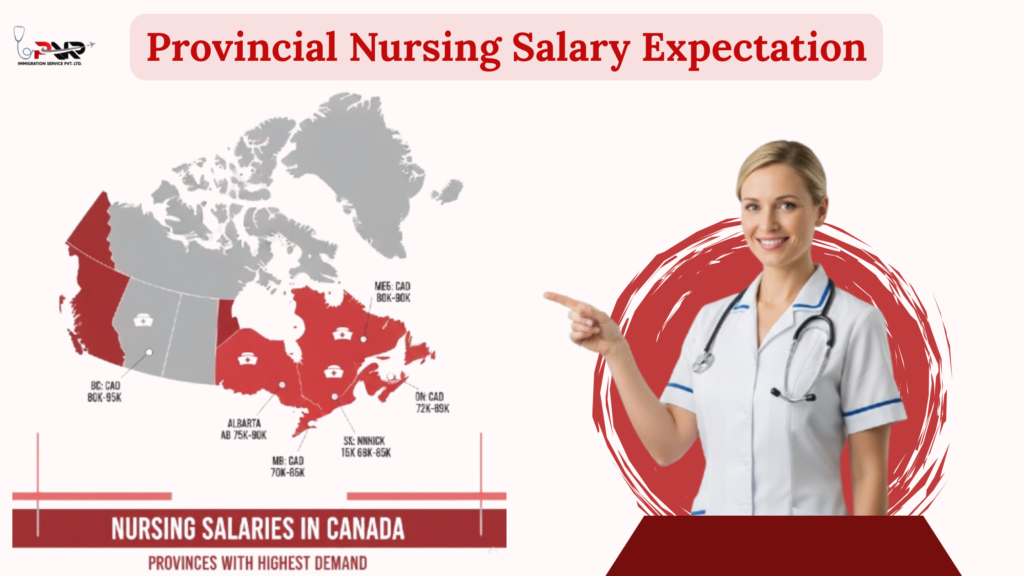
- Good Pay: Registered nurses in Canada earn between CAD 60,000 and 90,000 each year, depending on province and specialization.
- Immigration Options: Clear routes to permanent residency through Express Entry and Provincial Nominee Programs.
- High Demand: More than 100,000 nursing positions are needed across provinces.
- Balanced Schedule: Nurses work 37.5 hours a week with full benefits.
- Career Growth: Nurses can take advanced training courses and earn specialized certifications.
Tip: Provinces such as Ontario, British Columbia, and Alberta actively hire skilled nurses through dedicated immigration programs.
Basic Steps to Become a Nurse in Canada
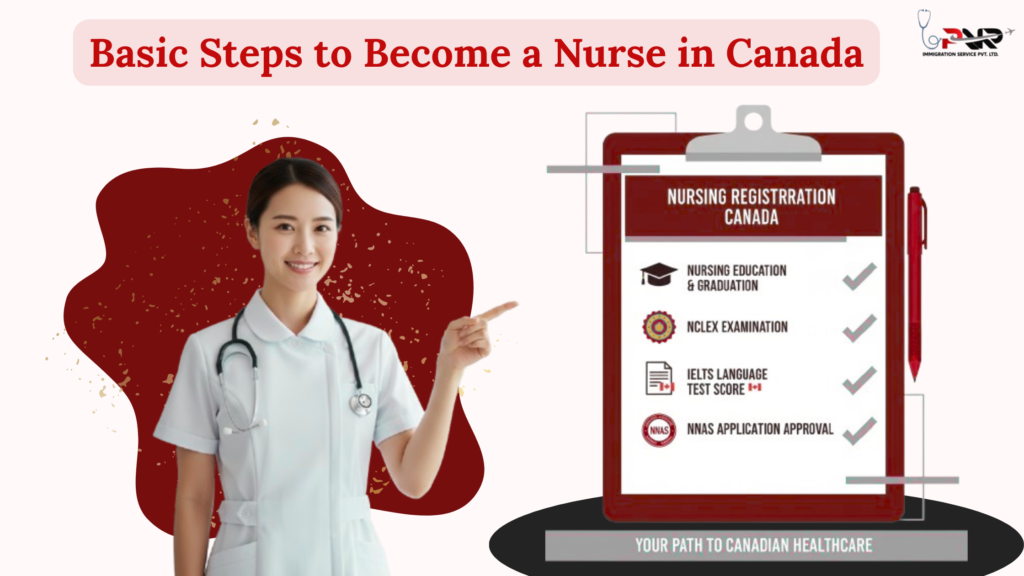
Make sure you meet all key qualifications before you apply.
Educational Qualifications
- Nursing diploma or a bachelor’s degree (minimum 3-year program)
- Submitted official transcripts along with course details
- Degree from a recognized nursing institution
Work Experience
- Valid registration with the Nepal Nursing Council.
- Minimum 1-2 years clinical experience (highly recommended)
- Good standing certificate from the employer
Language Requirements
- IELTS Academic: Must achieve an overall score of 6.5, with no individual band below 6.0.
- Alternative: CELBAN (Canadian English Language Benchmark Assessment for Nurses), only for English-speaking provinces
- Aim for a score of 7.0, as some provinces accept it to fast-track the process.
Examination Requirement
- You need to pass the NCLEX-RN (National Council Licensure Examination).
- All provinces in Canada require the NCLEX to get Registered Nurse (RN) jobs.
Visa processing steps for nursing in Canada
Step 1: Pass the NCLEX-RN exam.
The NCLEX exam opens the door to many career options for nursing in Canada. Since 2015, all provinces have set the NCLEX-RN test as a standard to grant licenses to registered nurses.
Understand the NCLEX Basics:
- This is a computer-adaptive test with 75 to 145 questions.
- The exam has a maximum time limit of 5 hours.
- Testing locations are in India (Noida, Delhi, Mumbai, and Bangalore).
- The exam fee totals USD 360.
- Preparation costs in Nepal range from NPR 90,000 to 120,000.
Note: Spend about 3 to 4 months on intensive study. Take practice questions and mock exams as much as possible.
Step 2: Apply for NNAS Credential Assessment
The National Nursing Assessment Service (NNAS) reviews whether your nursing education aligns with the Canadian standards or not.
Documents You Need:
- Your nursing degree certificate
- Official transcripts from your nursing school
- Course descriptions and syllabus
- Certificates of professional registration
- Letters confirming past employment
Processing Details:
- It takes 3 to 6 months.
- Costs range from CAD 650 to 850.
- Start early, as verification involves direct contact with your institution.
Step 3: Apply for Provincial Nursing License
Every province in Canada has a different regulatory body for nurses. You must get licensed in the province where you want to work.
| Province | Regulatory Body | Processing Time |
| Ontario | College of Nurses of Ontario (CNO) | 4-6 months |
| British Columbia | BC College of Nurses and Midwives | 3-5 months |
| Alberta | College of Licensed Practical Nurses of Alberta | 3-4 months |
| Saskatchewan | Saskatchewan Registered Nurses Association | 2-4 months |
| Manitoba | College of Registered Nurses of Manitoba | 3-5 months |
Note: Each Canadian province has its own nursing regulatory body. To build a successful career in Nursing in Canada, you must apply for a license in the province where you plan to work.
Requirements for Registration:
- An NNAS assessment to confirm eligibility.
- Proof of passing the NCLEX-RN exam.
- Results of a language proficiency test.
- A police clearance or background check certificate.
Step 4: Secure a Job Offer in Canada
After getting your Canadian nursing license, you can start applying for jobs.
Where to Look:
- Career portals of hospitals (like Toronto General or Vancouver General Hospital)
- Online job searching sites like Indeed Canada, Workopolis, and Eluta.ca
- Healthcare recruitment agencies to guide you through the right career path
- Networking on LinkedIn to connect with professionals and recruiters
Step 5: Start the Work Permit Application for Canada
After you get your job offer, you can begin your application for a Canadian work permit as a nurse.
Documents You Need:
- The job offer document from your employer in Canada
- Proof of your provincial nursing license
- NCLEX pass proof
- Results from a language proficiency test
- A completed NNAS evaluation
- A police clearance and the results of a medical check-up
- Your valid passport
Steps to Apply:
- Fill out your online application on the IRCC website
- Upload the required documents
- Pay the $155 CAD fee
- Give your biometrics
- Processing takes about 4 to 8 weeks.
Step 6: Explore Permanent Residency Possibilities
Nurses in Canada can take advantage of several immigration routes. Some of them are:
🗸 Express Entry System
Registered nurses are eligible for this program, which comes under the Federal Skilled Worker Program.
Here’s what you need to qualify:
- At least one year of continuous work experience
- CLB 7 language score (equivalent to IELTS 6.0 in each band)
- Educational Credential Assessment (ECA)
- CRS score of 450 or higher (category-based healthcare draws available)
Processing Time: After receiving your Invitation to Apply (ITA), it takes 6 months.
🗸 Provincial Nominee Programs (PNP)
Provinces in Canada actively select nurses through specific streams:
- Ontario: Human Capital Priorities Stream
- British Columbia: Healthcare Professional Category
- Saskatchewan: International Health Worker Pool
- Nova Scotia: Labour Market Priorities Stream
- Manitoba: Skilled Worker Program
Advantage: A provincial nomination boosts your Express Entry score by 600 points.
Cost of Nursing in Canada
Knowing the expenses beforehand lets you prepare for your journey into nursing in Canada even better. Here’s a breakdown of the expected costs:
| Expense | Estimated Cost (CAD) |
| NCLEX Preparation | $700 – $950 |
| NCLEX Exam Fee | $360 |
| IELTS/CELBAN | $300 – $400 |
| NNAS Assessment | $650 – $850 |
| Provincial Registration | $300 – $600 |
| Police Clearance | $50 – $100 |
| Medical Examination | $200 – $400 |
| Work Permit Fee | $155 |
| Total Investment | $2,715 – $3,815 |
Note: All costs mentioned above are in Canadian Dollars (CAD). With starting salaries of CAD 60,000+, you’ll recover these costs within your first few months of working.
Once you finish all the steps, like passing the NCLEX, getting provincial registration, and securing a work permit, you can start your nursing career in Canada. Employers have detailed onboarding programs. These include an introduction to Canadian healthcare rules, safety training, and instructions specific to your unit. Many healthcare facilities help with relocation by offering facilities including temporary housing, refunding travel costs, and providing settlement guidance to ease your adjustment. Make time to apply to get your Social Insurance Number (SIN), set up a bank account in Canada, and join other Nepali nurse communities in your area to build a support system as you settle in.
Conclusion
Nursing in Canada offers a path to career advancement, stable income, and a better lifestyle. The process has many steps, such as NCLEX preparation and getting your nursing license in Canada, but each achievement moves you closer to working in one of the top healthcare systems in the world.
If you’re someone who truly wants a nursing career in Canada, expert advice can make a big difference. PnR Service Nepal guides Nepali nurses through credential assessment, visa processing, and job placement with personalized support.
Get started on your nursing career in Canada with the right help today.
FAQs
Q: Can I work in Canada without the NCLEX?
No. The NCLEX-RN has been mandatory in all provinces since 2015.
Q: Which province processes applications fastest?
Saskatchewan and Nova Scotia take less time, but it depends on individual situations.
Q: Is a job offer required to get permanent residency?
No, it is not always needed. You can apply through Express Entry if you qualify through international work experience and meet the CRS criteria.
Q: How long does the entire process take?
The overall timeline, from preparing for the NCLEX to starting work in Canada, takes 14 to 18 months.
Q: Can my family come with me?
Yes, they can. Both spouses and dependent kids are eligible to get work permits and later apply for permanent residency.

IMPORTANT NOTICE !!!

This will close in 15 seconds